
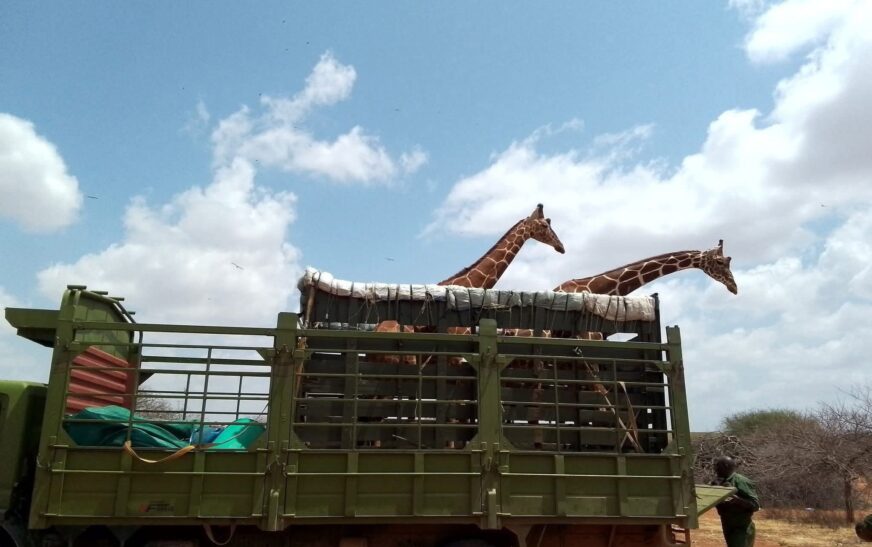
WAJIR— A storm of condemnation has erupted in Northern Kenya after the Kenya Wildlife Service (KWS) secretly relocated two orphaned reticulated giraffes—endangered Somali subspecies—from Wajir County to a private sanctuary in Nanyuki, sparking accusations of unlawful marginalization and betrayal of community-led conservation efforts.
Wajir South MP Mohamed Adow led the charge, labeling the move a “secret and unlawful” violation of devolution and community rights. “These young giraffes, who lost their mother to poachers, were being cared for by local community members and volunteers,” Adow stated, emphasizing the lack of consultation with stakeholders. He demanded their immediate return to Wajir, full transparency on the decision-making process, a moratorium on future translocations without consent, and an inclusive wildlife management framework. “This is not conservation—it is betrayal,” Adow declared, underscoring Northern Kenya’s harsh conditions where locals have protected wildlife despite rampant threats.

The North Eastern Wildlife Conservancies Association (NECA), representing community conservancies across the region, issued a scathing press statement from Garissa, accusing KWS of breaching Kenya’s Constitution (Article 69 on public participation), the Wildlife Conservation and Management Act (WCMA) of 2013, and its own translocation guidelines. The giraffes, rescued after their mother’s slaughter, were stable in their natural ecosystem under community watch, NECA argued. “There was no public proposal, no technical committee approval, no meaningful engagement with Wajir County or NECA,” the statement read, rejecting the relocation as non-emergency and prejudicial to adjacent communities.

North Eastern Wildlife Conservancies Association (NECA). Image: Courtesy
NECA highlighted viable alternatives like the community-run Garissa and Wajir Giraffe Sanctuaries, equipped with rangers and secure habitats. Their demands mirror Adow’s: immediate repatriation to Wajir or Garissa, a public explanation from KWS Director General Sally Kosgei, an independent probe, and commitments to bolster local protection with fixed ranger stations, motorbikes, and fuel in hotspots like Habaswein and Dadaab. “Removing survivors to other landscapes is abandonment, not conservation,” NECA concluded.
Echoing the fury, Siyad Jimale Amin, Executive Director of Horizon Analysts and Researchers Network, issued a 72-hour ultimatum: “Return our giraffes or face the consequences!” He framed the incident as symptomatic of deeper marginalization, painting Wajir residents as poachers while siphoning natural resources southward—a “modern way of marginalization” that tarnishes the region’s image.

KWS defended the action in a brief statement, claiming the giraffes were “rescued from poaching to ensure their safety and natural development” at Nanyuki Range Park, a site for endangered species rehabilitation. The agency did not address consultation lapses.
This controversy unfolds amid surging poaching in North Eastern Kenya, where Somali giraffes—down 50% in recent decades due to habitat loss and cross-border smuggling—face acute threats. Community initiatives like Wajir Giraffe Sanctuary have filled KWS gaps, investing scarce funds amid human-wildlife conflicts and delayed compensations. Critics warn the translocation erodes trust, signaling wildlife from the arid north is “available for removal” while locals battle insecurity.
As protests mount, Northern leaders vow sustained pressure,insisting true conservation must center communities. “Enough is enough,” Adow reiterated. With NECA mobilizing conservancies and MPs eyeing parliamentary oversight, KWS faces a pivotal test: repatriate the giraffes or risk fracturing fragile alliances in Kenya’s fight for biodiversity.