

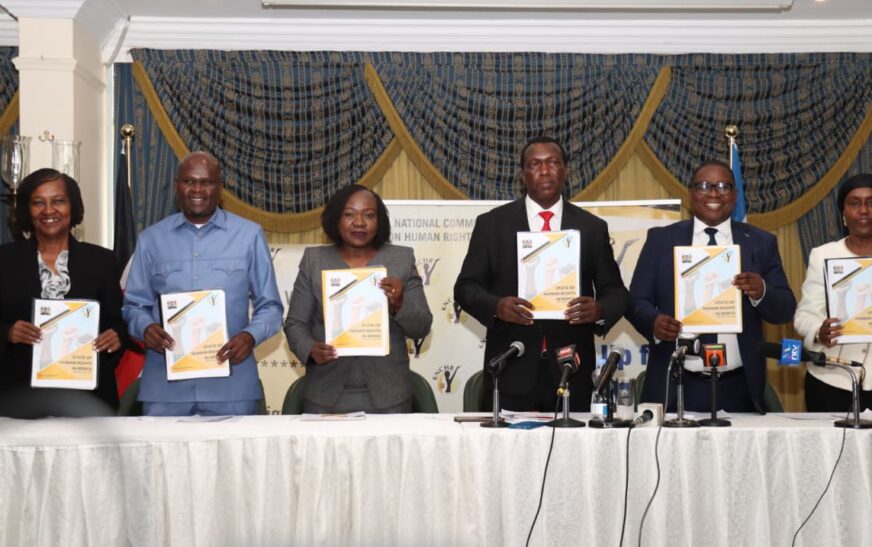
NAIROBI— Kenya’s human rights watchdog has raised alarm over a sharp rise in rights violations and warned that the government’s new university funding model risks entrenching inequality across the country.
In its annual State of Human Rights Report covering December 2024 to December 2025, the Kenya National Commission on Human Rights (KNCHR) said it had received 2,848 complaints over the year.
Violations of economic, social and cultural rights formed the largest share, with 1,381 cases, followed by 1,171 complaints linked to civil and political rights. A further 299 cases involved group rights, including issues affecting minorities and marginalised communities.
The Commission said the trends pointed to growing pressure on vulnerable households already struggling with high living costs, weak social protection and limited access to public services.
A major focus of the report is the government’s New Higher Education Funding Model (NHEFM), introduced with the promise of expanding access and making university education more equitable. KNCHR, however, found that the initiative is having the opposite effect.
According to the Commission, unregulated programme pricing by universities and higher education institutions has pushed the cost of education far beyond the reach of many students.
Financing bands meant to guide the model are being applied “unclearly and unevenly”, creating what KNCHR describes as a system that indirectly discriminates against poorer households.
The watchdog warns that the model, as currently implemented, risks deepening social and economic inequalities and contravenes Article 10 of the Constitution, which commits public institutions to fairness, inclusivity and equity.
KNCHR called for an urgent review of the funding framework, saying the government must ensure that higher education remains accessible to all Kenyans, regardless of their socio-economic background.
The Commission said it would intensify monitoring and continue pressing for reforms aimed at safeguarding rights and strengthening accountability across public institutions.