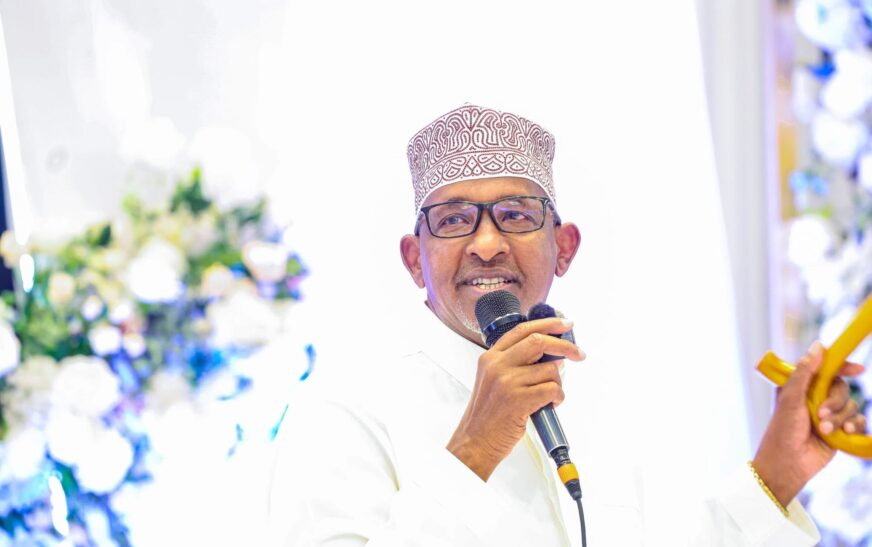

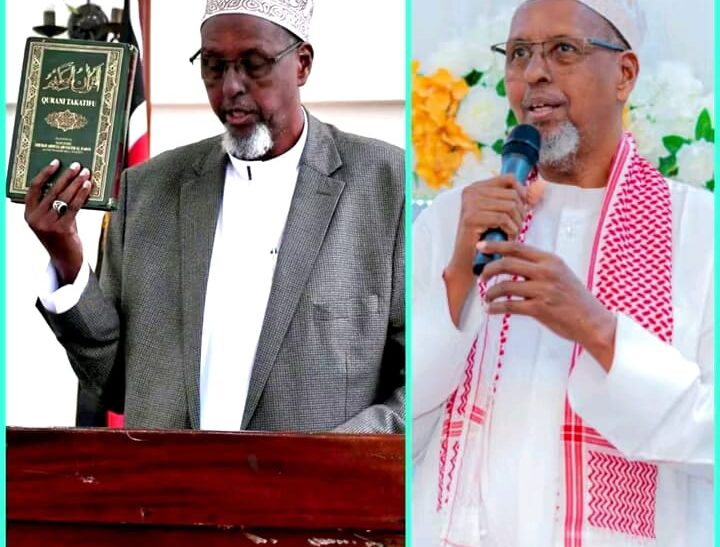
NAIROBI—In a region scarred by conflict and drought, Sheikh Abdisalam Sheikh Mohamed stands as a pillar of hope, blending faith, scholarship, and service to forge paths of peace. Just weeks after headlining a youth empowerment forum in Nairobi on October 10—where he urged Kenya’s next generation to embrace patriotism amid climate woes—the 2025 Master of Arts graduate from Mount Kenya University continues to redefine ethical leadership in Kenya’s North East.
His recent thesis on governance structures in Garissa County, submitted in May, underscores a career dedicated to amplifying marginalized voices.
Born in Kenya’s arid North Eastern province, Sheikh Abdisalam’s early life was a masterclass in resilience. At Jaribu and Garissa Primary Schools (1972–1977), he aced the Certificate of Primary Education with 33/36 points, topping the district. Secondary studies at Kabete Technical School yielded a solid KCSE second-division in 1981, launching a trajectory of excellence.
Post-secondary, his Diploma in Social Work from Kenya Institute of Administration (1986–1987) ignited leadership; he chaired the students’ council by 1987. A BA in Human Resource Management from Kenyatta University (2003–2007) followed, culminating in his 2025 MA in Governance and Ethics. Short courses in mediation (UK), corporate governance (South Africa), and project management honed his toolkit for turbulent times.
Professionally, Sheikh Abdisalam’s four-decade arc spans grassroots to governance. From 1981–2013, as manager of the Young Muslim Association complex in Garissa—overseeing schools, an orphanage, farm, and dispensary—he drove infrastructure booms through transparent, participatory models.
He then served on Garissa County’s Public Service Board (2013–2019), enhancing devolved services. A certified social worker and IHRM fellow since 2014, he led as North Eastern Branch Secretary (2018) and chaired the council’s Finance Committee (2020–2023).
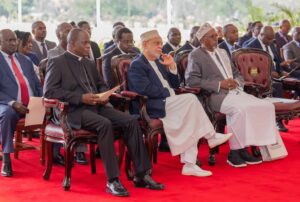
His boardroom influence is vast: From the 1998 Koech Education Commission—advocating for ASAL and religious education—to chairing Garissa Teachers College’s board (2023–2026) and the Anti-Corruption Steering Committee. In 2023, he joined the Presidential Taskforce on Religious Organizations’ frameworks, and since 2022, the National Peace and Mediation Team.
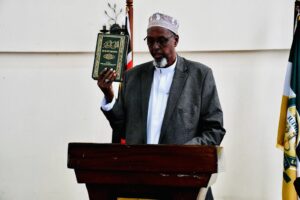
Humanitarian hallmarks define him. Founding Al Ihsan Peace and Development Organization in 2005, he chairs efforts in relief, water access, and youth mentorship—distributing rations and livelihoods amid crises.
Peace milestones include mediating Garissa bandits’ 1992–1993 surrender and the 2001 Ajuran-Garre accord in Wajir. His Dialogue Approach to Peace (DAP) inspires ongoing advocacy via social media and forums.
A prolific mentor, Sheikh Abdisalam’s booklet “Framework for Success in Studies & Guiding Principles”has empowered thousands through school workshops. His writings—from “A Reflection on the Garissa Massacre”to a 2025 paper on communication in devolution—shape discourse on BBI and beyond.
As Kenya navigates 2025’s challenges, Sheikh Abdisalam embodies integrity’s quiet revolution. “Peace is dialogue, not division,” he told the youth forum. In Garissa’s sands, his legacy blooms—proving one voice can harmonize a nation.