

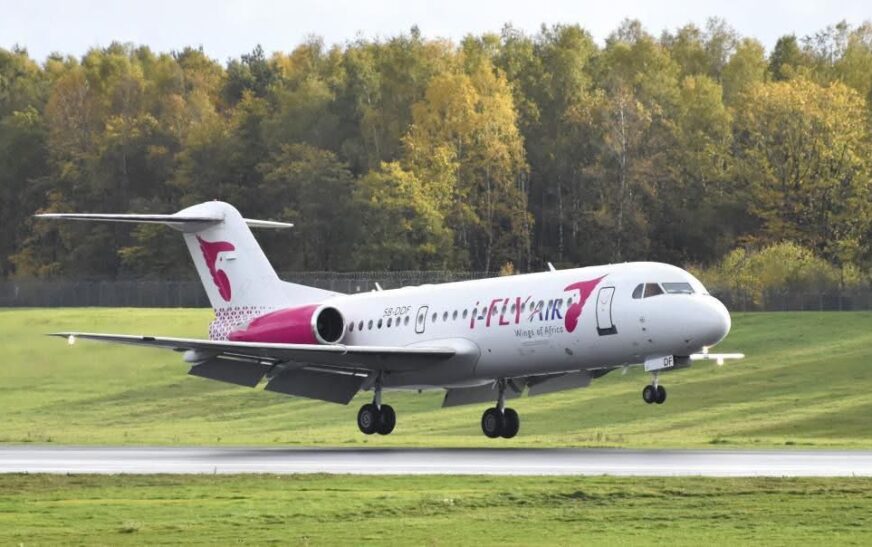
NAIROBI— Several airlines have announced modest airfare increases effective April 10, 2026, citing persistent disruptions in global fuel supply. I-Fly Air and Renegade Air informed passengers of the adjustments, emphasizing efforts to minimize changes while upholding safety and service standards.
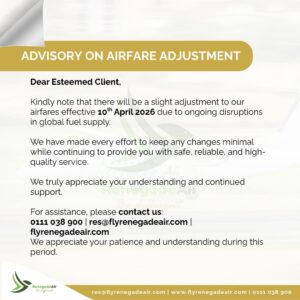
In its advisory, I-Fly Air stated: “There will be a slight adjustment to our airfares… due to ongoing disruptions in global fuel supply. We have made every effort to keep any changes minimal while continuing to provide you with safe, reliable, and high-quality service.”
We remain committed to delivering a safe, reliable, and high-quality travel experience across all our routes.
Kindly note that a measured adjustment to our airfares will take effect from 10th April 2026. pic.twitter.com/EnIiPuwyOC
— i-FlyAir (@i_FlyAir) April 9, 2026
Renegade Air echoed this, noting a “measured adjustment” driven by “ongoing shifts in global fuel dynamics,” while reaffirming commitment to operational integrity and passenger expectations.
The hikes reflect broader industry pressure from a severe energy shock triggered by the U.S.-Israeli conflict with Iran. Since late February 2026, the effective closure of the Strait of Hormuz — a chokepoint handling about 20% of global oil trade — has slashed crude and refined product flows, including jet fuel. Supply losses have reached millions of barrels per day, with cumulative shortfalls exacerbating shortages. Jet fuel prices have roughly doubled in many markets, surging from pre-conflict levels around $2.50 per gallon to over $4.50–$4.80 in recent weeks.
This crisis has forced airlines worldwide to raise fares, introduce surcharges and in some cases cut capacity or cancel flights. Shortages first hit Asia hard due to heavy reliance on Middle East supplies and are now spreading to Europe with warnings of tighter availability through April and beyond. Emergency stock releases by the IEA and governments have provided partial relief but fall short of fully offsetting the gap, estimated at up to 20 million barrels per day in combined oil and gas impacts.
The ongoing disruptions highlight aviation’s vulnerability: fuel typically accounts for 25–35% of operating costs. Prolonged instability risks higher ticket prices, reduced flight schedules, and weaker travel demand. While a recent two-week ceasefire announcement sparked temporary market relief, analysts caution that restarting shut-in production and tanker routes could take weeks to months. Travelers should expect sustained pressure on fares unless supply chains normalize quickly.
The announcements from I-Fly Air and Renegade Air underscore how geopolitical tensions continue to ripple through everyday costs, testing the resilience of global aviation amid an uncertain energy outlook.