
NAIROBI– Council of Governors (CoG) has criticized the Senate’s County Public Accounts Committee (CPAC) over the mass summons of county bosses, demanding the immediate withdrawal of alleged arrest warrants and accusing the process of being tainted by harassment and political interests.
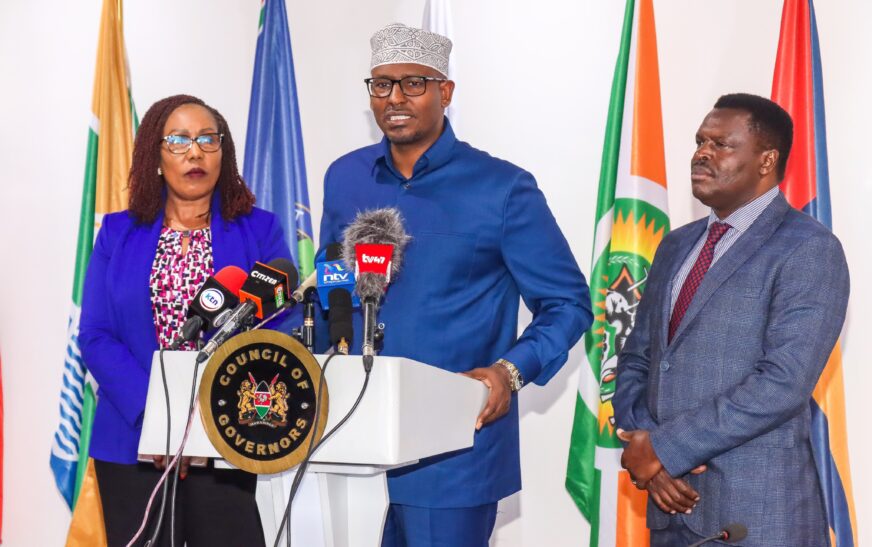
In press briefing delivered by Council of Governors Chairperson Ahmed Abdullahi, the Council revealed that 29 governors were summoned on Monday by the CPAC, but only two appeared. Those who did attend declined to engage on substantive audit matters, aligning with the CoG’s collective position. The standoff escalated after reports of attempted arrests, including a dramatic police operation targeting Nairobi Governor Johnson Sakaja at City Hall.
“We demand the immediate withdrawal of any alleged warrants of arrest; we have not seen any,” Abdullahi stated.
“We also demand the withdrawal of any coercive measures against governors pending an impartial determination of this matter.” He added.
HAPPENING NOW: Press briefing by the CoG Chairperson H.E FCPA Ahmed Abdullahi on Non-appearance of Governors before the Senate CPAC Committee https://t.co/Vde9Zh996l
— Council of Governors (@KenyaGovernors) March 31, 2026
The CoG urged the Inspector General of Police to verify the claims to prevent a “miscarriage of justice” or the misuse of state agencies for “political and personal interests.” The Council described the targeting of Governor Sakaja as particularly “unfair”, insisting that actions against governors must be grounded in verified facts rather than intimidation.
This latest flare-up stems from a months-long dispute. Governors have boycotted CPAC sessions citing alleged extortion, harassment and intimidation by certain senators. Earlier this year, the Council of Governors named specific senators they wanted removed from oversight roles and suspended appearances until grievances were addressed. The Senate, however, has maintained that accountability cannot be conditional, with threats of fines or declarations of unfitness to hold office for defiant governors.
The confrontation highlights deep institutional tensions in Kenya’s devolved system. While Senate oversight is constitutionally mandated to ensure prudent use of public funds—especially amid recurring Auditor-General queries on county spending—the governors’ unified resistance raises legitimate questions about fairness and due process. If the process appears selective or coercive, it risks eroding public trust in both arms of government.
Conversely, widespread non-appearance undermines efforts to combat graft at the county level, where billions in devolved funds are spent with limited scrutiny. Sakaja’s eventual surprise appearance at the Senate, following the police pursuit suggests a possible de-escalation, yet the underlying allegations of misconduct on both sides point to a need for structured dialogue, perhaps mediated by the Judiciary or national leadership.
The Council of Governors has called for the immediate withdrawal of the warrant of arrest against H.E Johnson Sakaja or coercive measures against Governors over non-appearance before the Senate’s County Public Accounts Committee (CPAC).
Addressing the press, @CogChair noted that… pic.twitter.com/tsyA8rC6xs— Council of Governors (@KenyaGovernors) March 31, 2026
The CoG reaffirmed its commitment to accountability but stressed it must be “fair, transparent, and free from harassment or extortion.” It called on the Senate to address governors’ concerns regarding CPAC’s conduct to foster good governance rather than political theater.