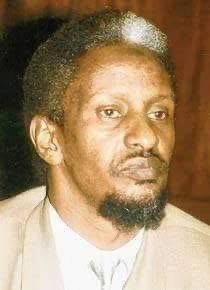


BY: Siyad Jimale Amin
Former Deputy President Rigathi Gachagua must clearly direct his criticisms toward specific institutions or individuals rather than conflating unrelated issues. He should clarify whether his grievances are with governors and MPs from Northern Kenya, the Ministry of Education, the Somali community, or concerns over the prudent use of public resources.
1. Allegation that Governors from the Northeastern Region Have Failed to Build Schools Despite Receiving Billions
Despite having served as Member of Parliament for Mathira Constituency and later as Deputy President for two years, Rigathi Gachagua appears unaware that county governments are not responsible for constructing secondary schools. Their mandate in education is limited to early childhood development (ECD) only.
2. Claim that There Are No Schools in Northern Counties and That MPs from the Region Have Failed to Build Schools Using the National Government Constituencies Development Fund (NG-CDF)
According to the Commission on Revenue Allocation (CRA) Kenya County Factsheets, Third Edition (2022), there were 320 public secondary schools in Northern Kenya counties as of 2023, largely supported by the NG-CDF. It is worth noting that these regions have historically been underdeveloped due to deliberate policy choices—from Sessional Paper No. 10 of 1965 to skewed national budgets that prioritized “high-potential” areas while depriving arid and semi-arid counties of adequate investment in roads, schools, hospitals, and other infrastructure.
3. Assertion that Prestigious National Schools Such as Alliance High School and Mang’u High School Should Be Reserved for Students from the Mount Kenya Region, Excluding Those from Northeastern Counties
First, it is essential to clarify the origins of these institutions:
– Alliance High School was established on 1 March 1926 by the Alliance of Protestant Missions, a consortium that included the Church of Scotland Mission, the Church Missionary Society (Anglican), and other groups. It was the first secondary school in Kenya to offer higher education to Africans.
– Mang’u High School was founded in 1925 (initially at Kabaa before relocation) by Dutch priest Father Michael Joseph Witte of the Holy Ghost Fathers, a Catholic missionary order also known as the Spiritans.
– Lenana School (originally the Duke of York School) was established in 1949 by the colonial administration under Governor Philip Euen Mitchell, primarily for children of European settlers.
These schools were founded by different entities—Protestant missionaries for Alliance, Catholic missionaries for Mang’u, and the British colonial government for Lenana. Upon independence, they were inherited by the Government of Kenya and have since been maintained with public funds. They belong to all Kenyans, irrespective of region, religion, or ethnicity.
Additionally, many residents of Northern Kenya origin live in other parts of the country, including Nairobi, Mount Kenya, Western, Nyanza, and Coast regions. Their children attend schools in those areas, and no law or policy restricts such access.
Student placement into national Senior School (Grade 10) is managed by the Ministry of Education through an automated system on the Kenya Education Management Information System (KEMIS) portal. According to the Ministry, placement is based solely on learners’ choices, performance in the Kenya Junior Secondary Education Assessment (KJSEA), psychometric test results, equity considerations, and school capacity—not political intervention.
4. Concerns Raised About Somali Investments in Nairobi and Other Parts of the Country, Including the Mount Kenya Region
The Somali community in Kenya has established a significant presence in both the public and private sectors. Their entrepreneurial activities, particularly in areas such as Parklands, South C, South B, Donholm, and Eastleigh in Nairobi, have transformed these locations into major commercial hubs featuring malls, retail and wholesale trade, real estate, and imports.
Somali businesses make substantial contributions to Kenya’s economy through job creation, tax revenues, property development, and trade. Key factors behind this success include:
– Strong community networks and trust-based financial systems.
– A cultural emphasis on reinvestment, resilience, and collective support.
– Progression from small-scale retail and wholesale operations to large-scale real estate ventures.
This influence has expanded to other cities, including Kisumu, Nakuru, Mombasa, and Kiambu.
Efforts by Rigathi Gachagua and his associates to discredit this progress or discourage Northeastern businesspeople from investing in Nairobi must be firmly rejected. Nairobi belongs to all Kenyans, not a privileged few.